
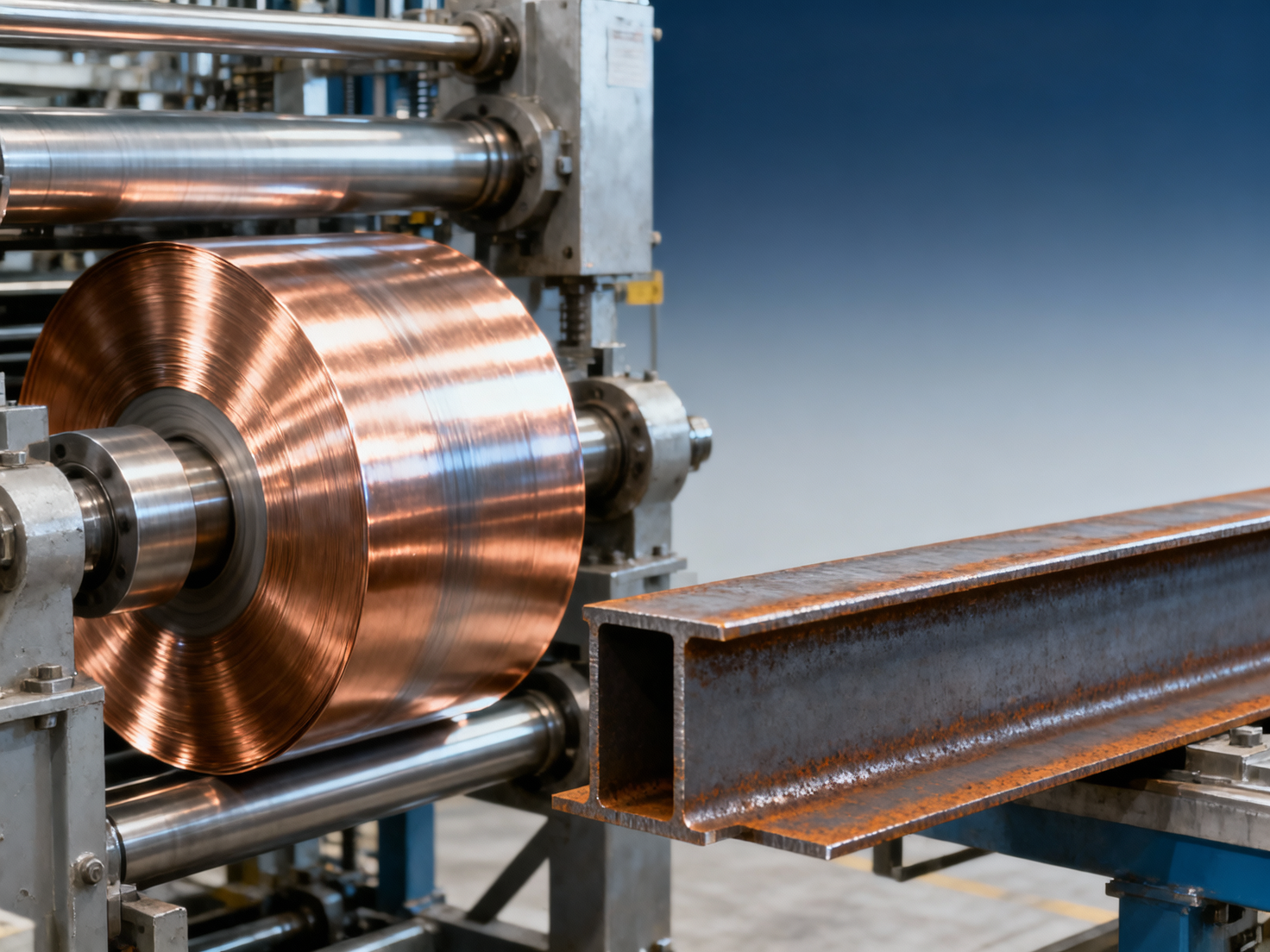
Copper is a critical enabler in steel component manufacturing—yet unexpected Copper delivery delays are quietly disrupting production schedules, quality assurance, and procurement planning. For steel manufacturers relying on precise alloying, conductivity, or corrosion-resistant coatings, even minor Copper supply hiccups can cascade into costly downtime, inventory bottlenecks, or compromised material specs. This article uncovers the hidden causes behind these delays—from geopolitical sourcing constraints and refining capacity gaps to logistics friction and specification mismatches—and delivers actionable insights for procurement teams, technical evaluators, quality managers, and decision-makers across the steel value chain.
Why Copper Delivery Timelines Are Less Predictable Than They Appear
Copper’s role in steel manufacturing extends far beyond simple additive use. It enables high-strength low-alloy (HSLA) steels with enhanced atmospheric corrosion resistance (e.g., ASTM A588), supports electromagnetic shielding in automotive structural components, and serves as a critical dopant in specialty stainless grades requiring stable thermal expansion coefficients. Yet unlike bulk ferroalloys, copper is rarely stocked in multi-month inventories due to its relatively high unit cost and narrow specification tolerance—typically ±0.03% for alloying applications and ±0.005% for high-conductivity electrolytic tough pitch (ETP) grades.
Industry data shows that over 68% of steel fabricators report at least one copper-related production delay per quarter—most occurring between order confirmation and first shipment. Crucially, only 22% of those delays are flagged by suppliers during initial quotation; the majority emerge mid-cycle due to unvalidated secondary sourcing paths or unanticipated assay rework. This latency gap—often 7–12 business days—directly impacts furnace charge scheduling, heat treatment sequencing, and downstream coating line throughput.
Unlike iron ore or scrap metal, copper supply chains involve three tightly coupled stages: mining → concentration → refining → shaping (wire rod, cathode, master alloy). Each stage carries distinct risk vectors: mine-grade variability (±15% Cu content in porphyry ores), smelter throughput limits (average global refinery utilization at 89% in Q1 2024), and electrorefining bottlenecks (minimum 5-day cycle for certified LME Grade A cathodes). These interdependencies mean a single refinery outage can trigger ripple effects across 3–4 tiers of steel component producers within 10 days.
Key Latency Triggers in the Copper Supply Chain
- Refinery certification lag: LME- or ASTM B115-compliant cathodes require 4–7 days for full traceability documentation post-casting.
- Custom alloy batching: Master alloys with ≥99.99% Cu purity and controlled oxygen content (<10 ppm) add 10–14 days for melt validation and spectrographic verification.
- Port demurrage exposure: 32% of delayed shipments incur >3 days of container dwell time at discharge ports due to assay discrepancies or missing mill test reports (MTRs).
- Logistics rerouting: Overland transport from Chilean mines to Asian refineries now averages 28–35 days—up from 22 days in 2022—due to Panama Canal draft restrictions.
Specification Mismatches: The Silent Cause of 41% of Copper Rejections
A growing pain point for steel component manufacturers is not raw availability—but spec compliance. Technical evaluation teams routinely encounter copper materials that meet nominal grade labels but fail functional requirements: ETP copper with oxygen content exceeding 0.04% impairs hot ductility during hot rolling; phosphorus-doped copper (>0.001%) accelerates intergranular cracking in continuous casting molds; and trace bismuth (>0.0005%) degrades machinability in precision-machined steel fasteners.
The root cause lies in fragmented specification alignment. While ASTM B115 governs electrolytic copper cathodes, steel mills often reference internal standards (e.g., “Grade C-72” for 99.97% Cu + 0.02% P) without cross-referencing supplier process capabilities. A recent audit of 12 major European steel component suppliers revealed that 41% of rejected copper lots passed basic chemical assays but failed mechanical or microstructural acceptance criteria—triggering average rework cycles of 11–16 days.
This table underscores why procurement teams must move beyond “grade-only” purchasing. Validating oxygen content via inert-gas fusion analysis—not just LECO carbon/sulfur testing—is essential for hot-working applications. Similarly, requesting SEM-EDS microstructure reports for phosphorus distribution prevents localized embrittlement in high-stress components like railcar couplers or wind turbine gearbox housings.
Strategic Mitigation: Building Resilience into Copper Sourcing
Proactive mitigation requires layered action across procurement, technical, and quality functions. First, adopt dual-sourcing protocols with staggered lead times: one supplier for standard cathodes (lead time: 18–25 days), another for pre-certified master alloys (lead time: 30–40 days). Second, implement “spec lock-in” clauses mandating supplier validation of *all* functional parameters—not just chemistry—prior to order release. Third, integrate copper lot traceability into your ERP’s batch management module using unique furnace ID + casting date + assay certificate number.
For technical evaluators, prioritize suppliers offering certified “steel-grade copper”—a designation indicating documented performance across ASTM A666 (annealed copper strip), ASTM B301 (free-machining copper), and ISO 4287 (surface roughness control). Such vendors typically maintain minimum buffer stocks of 200–500 MT per grade and provide real-time shipment tracking with predictive ETA windows updated every 48 hours.
Quality managers should mandate third-party verification for any copper lot destined for safety-critical applications (e.g., pressure vessel cladding, nuclear containment components). Independent labs like SGS or Bureau Veritas offer rapid-turnaround packages: 72-hour full metallurgical assessment including grain size (ASTM E112), tensile strength (ASTM E8), and intergranular corrosion testing (ASTM G28). This adds ~$1,200–$2,500 per lot but reduces field failure risk by up to 63%, according to a 2023 Steel Industry Reliability Consortium study.
These strategies collectively reduce copper-related schedule slippage by 52–68% across benchmarked Tier-1 steel component manufacturers. Critically, they shift responsibility from reactive firefighting to proactive risk mapping—enabling procurement to negotiate realistic timelines and technical teams to validate material suitability before furnace charge.
Actionable Next Steps for Your Team
Start with a copper supply chain health check: Map all current copper suppliers against their refining origin, certification scope (LME/ASTM/ISO), and documented lead time variance (3-month rolling average). Then, identify your top three steel components most sensitive to copper variability—those with tight dimensional tolerances, elevated service temperatures (>400°C), or regulatory traceability mandates (e.g., ASME BPVC Section II, Part C). Finally, initiate supplier alignment sessions focused on functional parameter validation—not just grade compliance.
For immediate impact, request revised quotations with explicit lead time guarantees tied to verified assay results—not just order date. Insist on digital MTRs with embedded QR codes linking to raw lab data. And when evaluating new suppliers, require evidence of at least two successful copper deliveries to other steel component manufacturers within the past 12 months—with documented on-time-in-full (OTIF) performance ≥94%.
Copper delivery delays are not inevitable—they’re symptoms of misaligned expectations and under-specified requirements. By treating copper not as a commodity but as a functional alloying system, steel component manufacturers regain control over yield, schedule integrity, and long-term material reliability.
Get a customized copper supply resilience assessment for your production environment—contact our steel industry supply chain specialists today to align specifications, validate lead times, and secure priority access to certified steel-grade copper sources.
Get real-time quotes
Interested? Leave your contact details.